Preparing for Peak Season: Lessons from Recent Supply Chain Surges (2026)
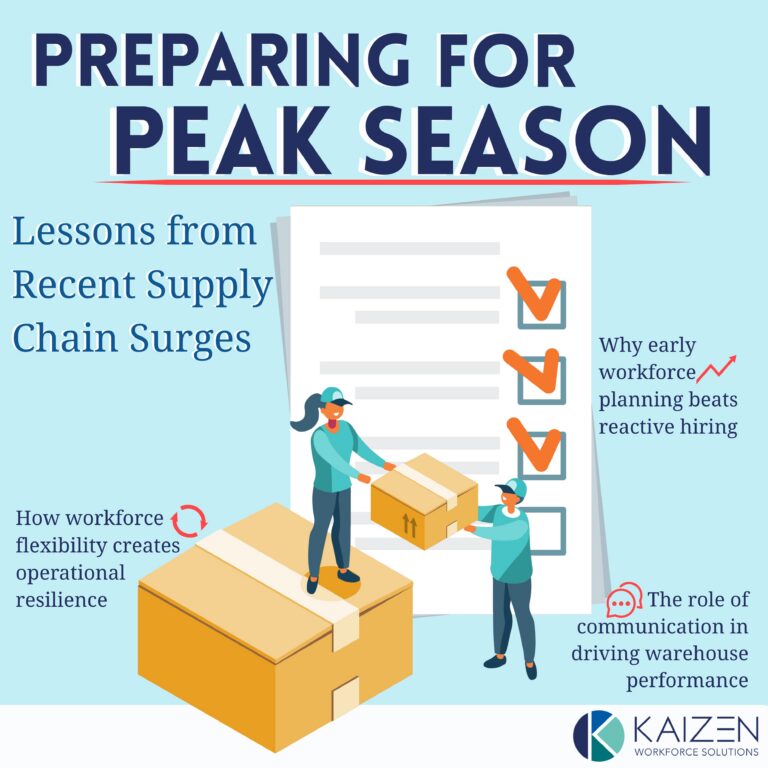
The New Reality of Peak Season in Warehousing
Peak season used to be predictable.
Retail spikes around Black Friday, Christmas, and seasonal demand allowed warehouse operations to plan months in advance with reasonable certainty. Today, however, supply chain disruption has changed the game completely.
From global instability and fuel price increases to labour shortages and shifting consumer behaviour, warehousing businesses are now facing demand surges at unexpected times throughout the year.
For industrial operations, the ability to scale quickly while maintaining productivity, safety, and service standards has become a major competitive advantage.
..and at the centre of that challenge? People.
Labour Shortages Continue to Pressure Warehousing
One of the biggest lessons from recent supply chain surges is that reactive hiring no longer works.
By the time peak demand arrives, the competition for reliable warehouse workers is already intense. Temporary employees today have more options than ever before across:
- logistics
- manufacturing
- delivery driving
- gig economy platforms
- flexible contract work
Workers are also prioritising more than just pay.
Flexibility, communication, wellbeing, and workplace culture are increasingly influencing where people choose to work — and whether they stay.
Businesses that invest early in workforce engagement are seeing stronger retention and better operational stability during high-pressure periods.
Early Planning Makes the Difference
The most successful warehouse operations do not wait until peak season begins to prepare.
Strong workforce planning now includes:
- forecasting labour demand
- analysing previous peak performance
- building recruitment pipelines early
- cross-training teams
- reviewing onboarding procedures
- strengthening communication channels
Proactive preparation reduces last-minute staffing pressure and helps businesses secure higher-quality temporary workers before the market becomes oversaturated.
In many cases, preparation months ahead of peak can significantly reduce overtime costs, absenteeism, and productivity loss later.
Flexibility Is Now Essential
Supply chain volatility has shown that rigid workforce models are no longer sustainable.
Warehouses need the ability to adapt quickly to fluctuating demand while balancing:
- labour costs
- worker wellbeing
- operational efficiency
- service expectations
Flexible staffing strategies now play a critical role in maintaining resilience.
This includes:
- scalable temporary workforce models
- multi-skilled employees
- flexible shift patterns
- ongoing talent pool development
- stronger recruitment partnerships
Agility is becoming one of the defining characteristics of successful warehousing operations.
Communication Drives Performance
During high-pressure operational periods, communication becomes one of the most valuable leadership tools.
Workers need clarity around:
- shifts
- expectations
- workload changes
- performance targets
- safety updates
Temporary employees especially benefit from visible management support and regular communication.
Warehouses that maintain strong communication cultures during peak periods often see:
- lower absenteeism
- stronger morale
- better productivity
- improved retention
Final Thoughts
Peak season preparation is no longer simply about handling higher order volumes.
It is about building a workforce strategy capable of responding to constant change.
Businesses that invest in:
- workforce planning
- onboarding
- communication
- wellbeing
- retention
- operational flexibility
will be far better positioned to manage future supply chain disruption.
Because ultimately, resilient warehouse operations are built not just on systems and processes, but on people
….and People are our business at Kaizen Workforce Solutions.